To deepen scientific and technological innovation collaboration and international joint talent cultivation among countries participating in the Belt and Road Initiative, and to build a platform for technical mutual learning and practical cooperation in the field of industrial artificial intelligence, on the morning of June 30, the University jointly organized the exchange session for trainees of the Belt and Road International Training Program on Industrial AI Applications with the Shanghai Artificial Intelligence Research Institute. Wang Xiaofan, President of Shanghai Institute of Technology, Liu Yanjing, Party Secretary of Shanghai Artificial Intelligence Research Institute, and Xu Chun, Secretary-General of the UNIDO Global Alliance on Artificial Intelligence for Industry and Manufacturing Excellence Center, attended the event.
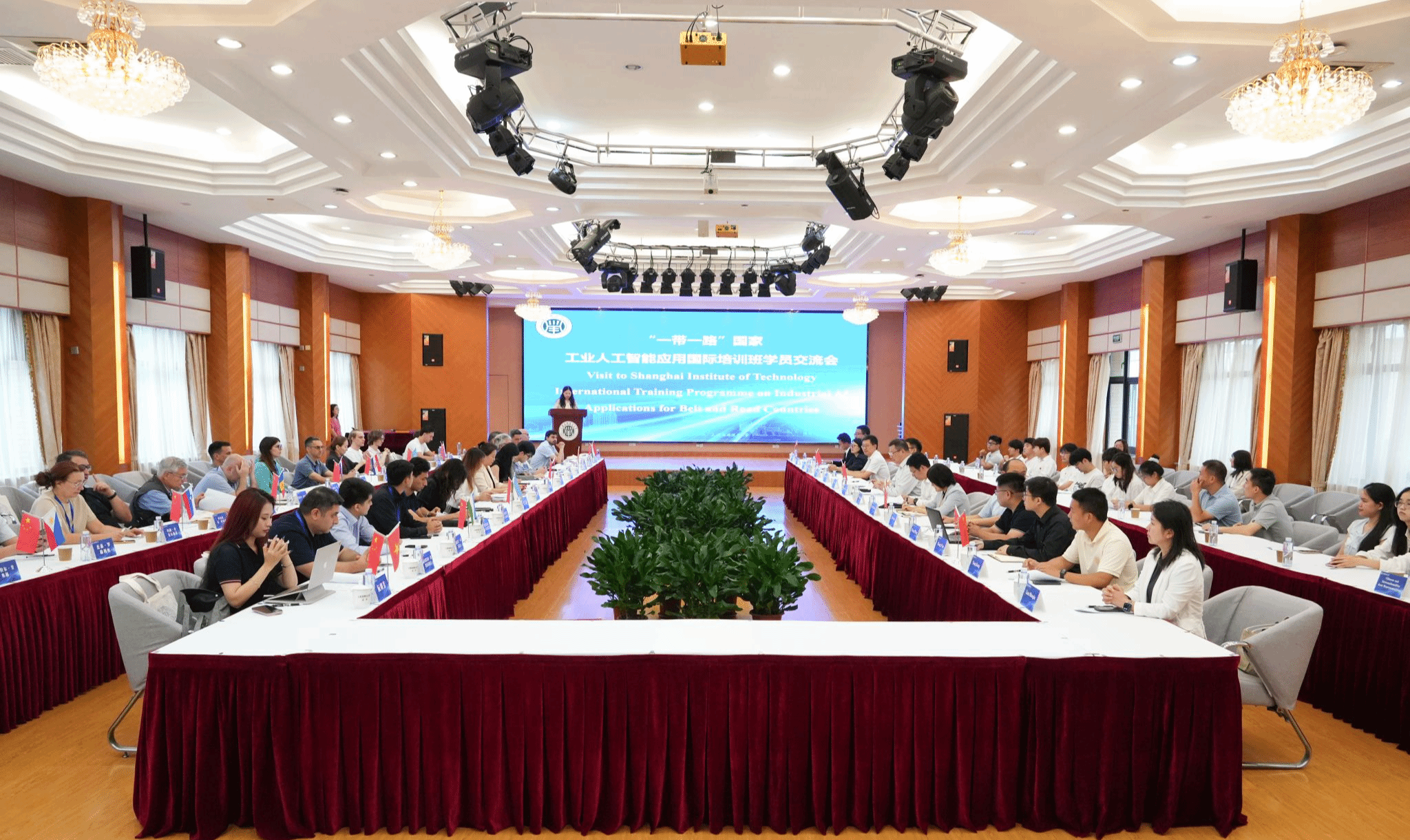
More than 70 participants attended, including trainees from 10 Belt and Road partner countries, representatives from Shanghai Artificial Intelligence Research Institute, and Chinese and international faculty and student representatives from the University. Relevant officials from the University's Party and Administrative Office, the Institute of Science and Technology, the Office of International Affairs (China-Laos Engineering Institute), and the Intelligent Technology Division also participated. The session was moderated by Zhang Lini, Deputy Director of the Office of International Affairs.
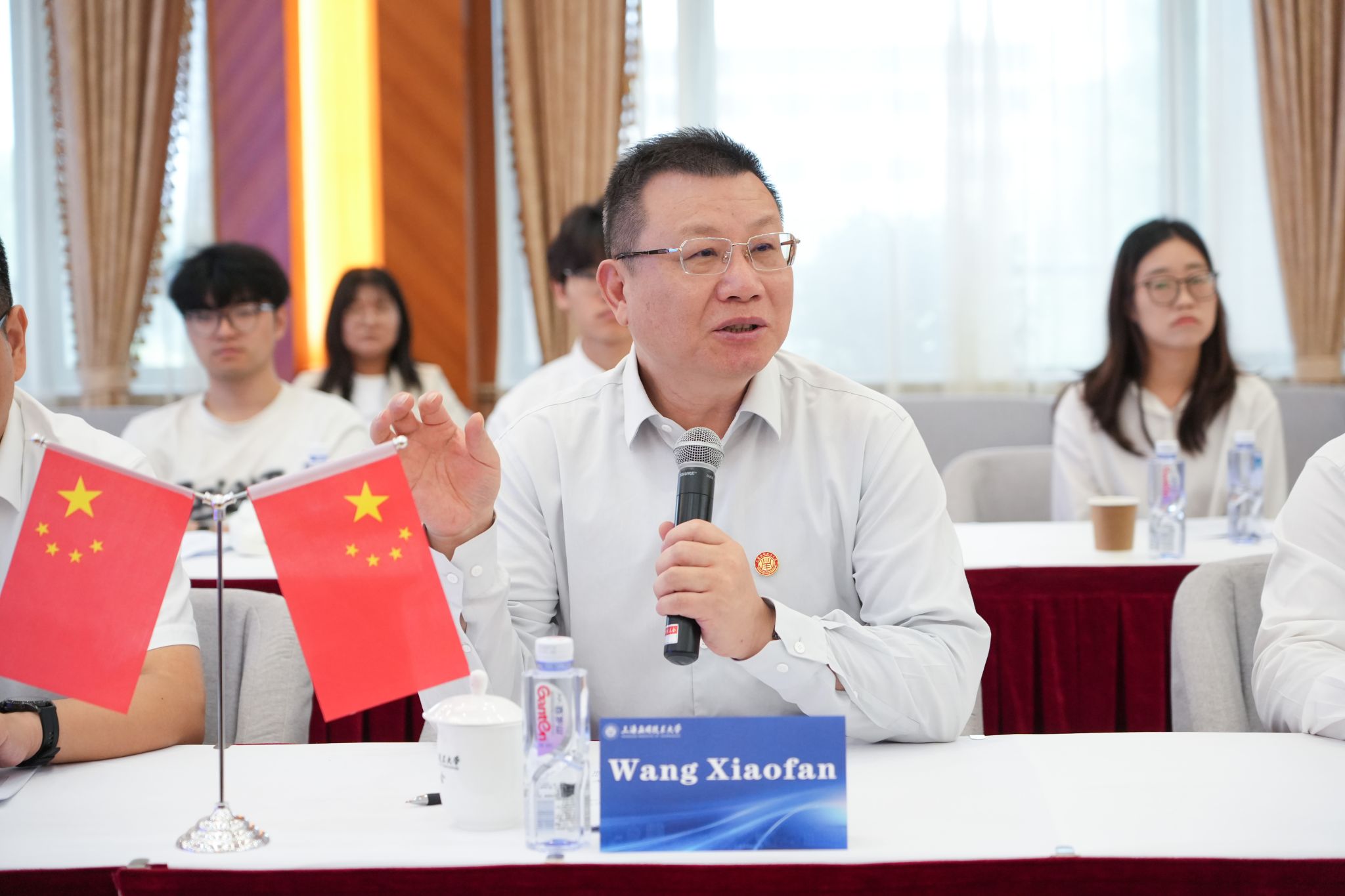
President Wang Xiaofan extended a warm welcome to the trainees and guests from various countries. He introduced the University's educational characteristics and development trajectory, noting that the University's key development milestones coincide with the wave of artificial intelligence industrial innovation. The University has proactively seized AI development opportunities by integrating its advantageous disciplines to establish the Intelligent Technology Division, focusing on industrial AI applications and striving to cultivate applied innovative talents suited for industrial upgrading. He also introduced the development of the AI4T Collaborative Innovation Institute, jointly established by the University and Shanghai Artificial Intelligence Research Institute. Leveraging Shanghai's first Belt and Road International Joint Laboratory—the China-Laos Railway Engineering International Joint Laboratory—the University has been continuously carrying out international talent cultivation and supporting infrastructure development in countries along the route.
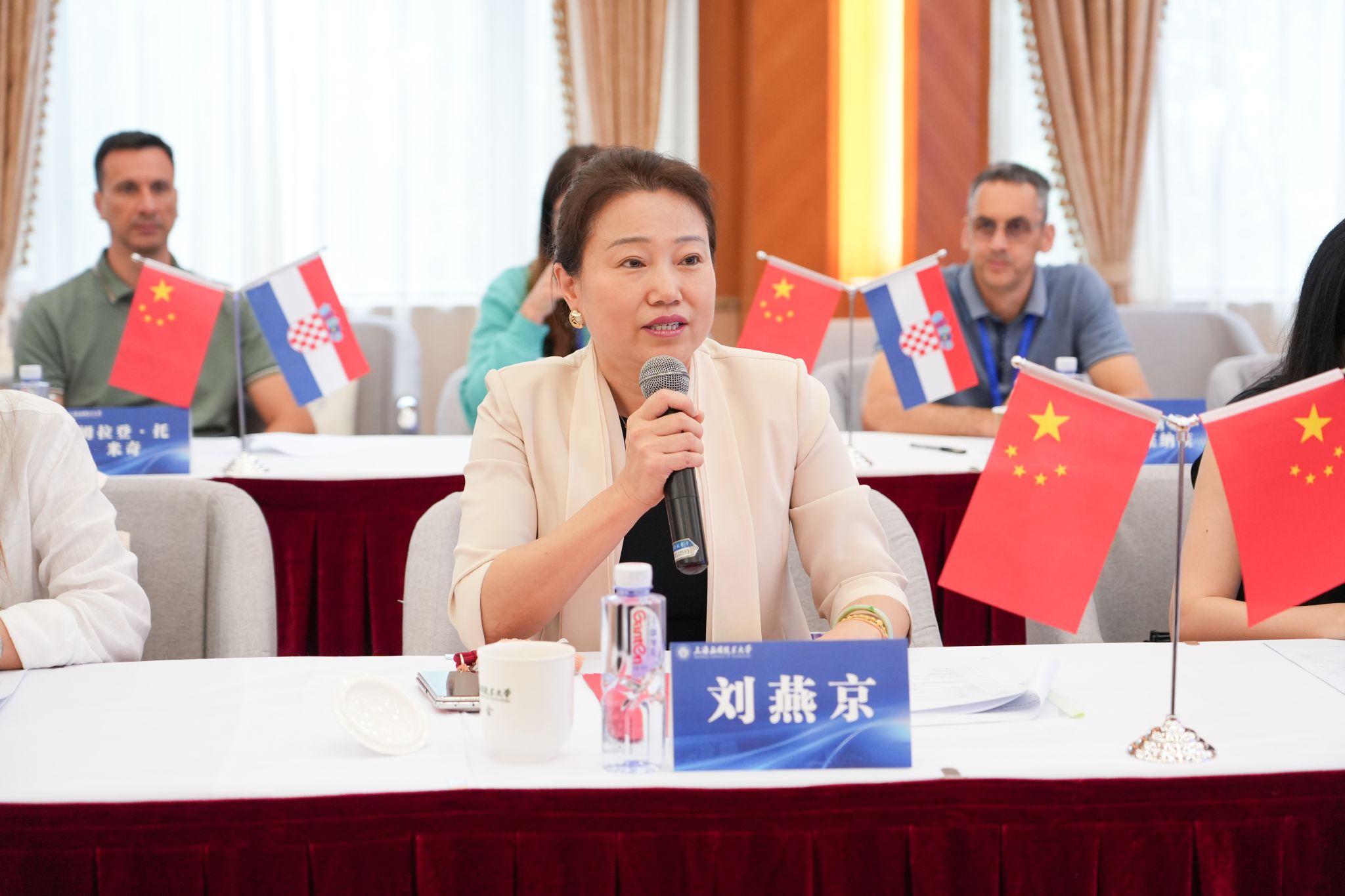
Liu Yanjing provided a comprehensive overview of the historical context and core educational and cooperative objectives of the Belt and Road International Training Program on Industrial AI Applications. She engaged in in-depth exchanges and sharing around global trends in industrial AI commercialization, digital transformation pathways for industrial chains, and the practical needs of manufacturing upgrading in Belt and Road partner countries. She stated that she would continue to deepen the collaborative mechanism between Shanghai Artificial Intelligence Research Institute and Shanghai Institute of Technology, leveraging the two major cooperation platforms—the UNIDO Global Alliance on Artificial Intelligence for Industry and Manufacturing Excellence Center and the AI Capacity Building Excellence Co-Creation Base—to fully open up a full-chain cooperation channel covering cross-border export of cutting-edge intelligent technologies, systematic cultivation of localized professional talents, and precise alignment of domestic and international industrial resources. The goal is to deliver replicable industrial intelligence solutions adaptable to the industrial foundations of various countries, comprehensively empowering Belt and Road partner countries to steadily advance industrial digitalization, intellectualization, and green transformation, and to share in the dividends of AI industry development.
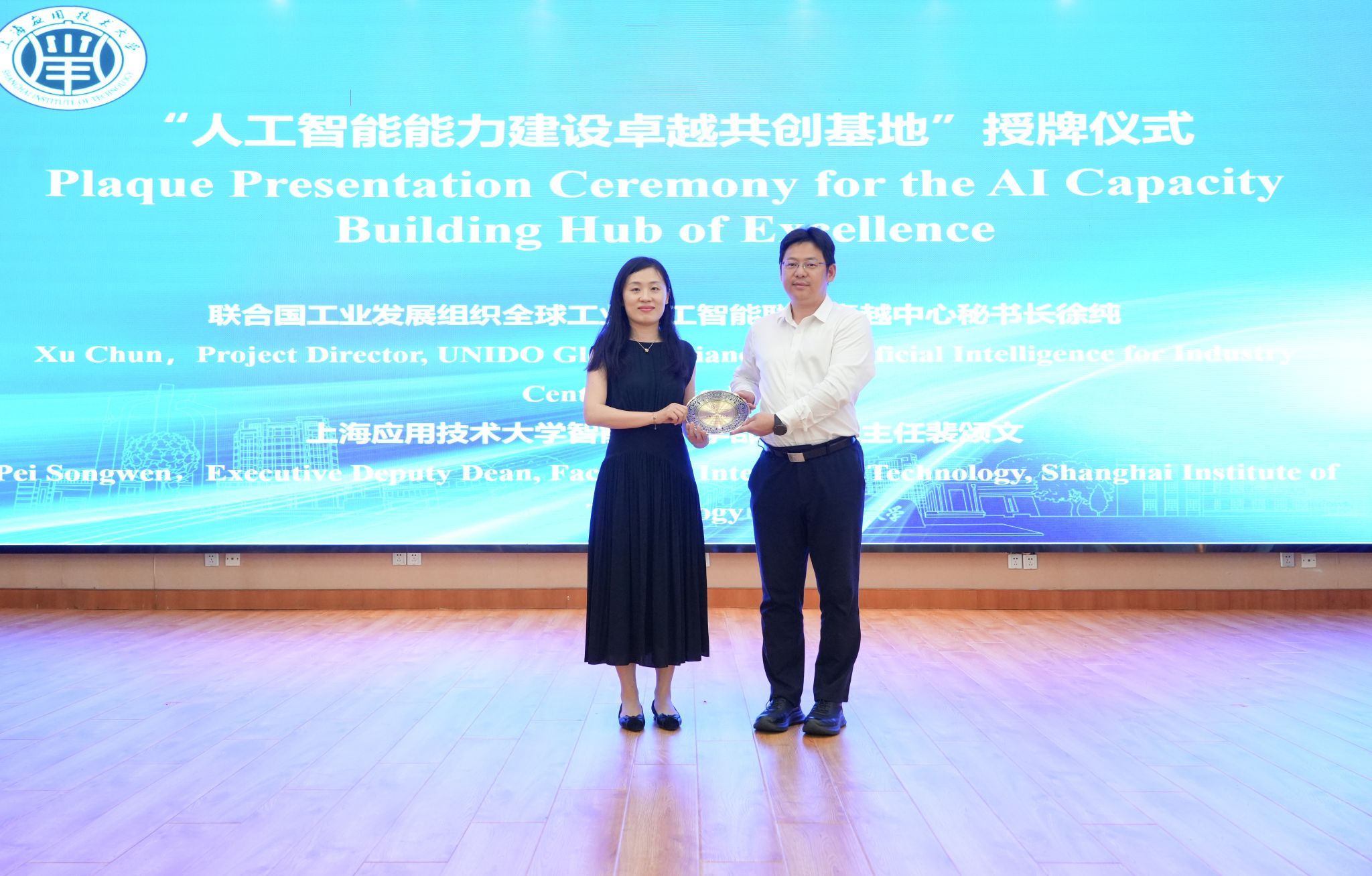
At the event, an awarding ceremony was held for the AI Capacity Building Excellence Co-Creation Base. This designation represents a high recognition by the Global Alliance on Artificial Intelligence for Industry and Manufacturing Excellence Center of our University's research strength in industrial AI, its industry-education integration model, and its effectiveness in cultivating applied talents.
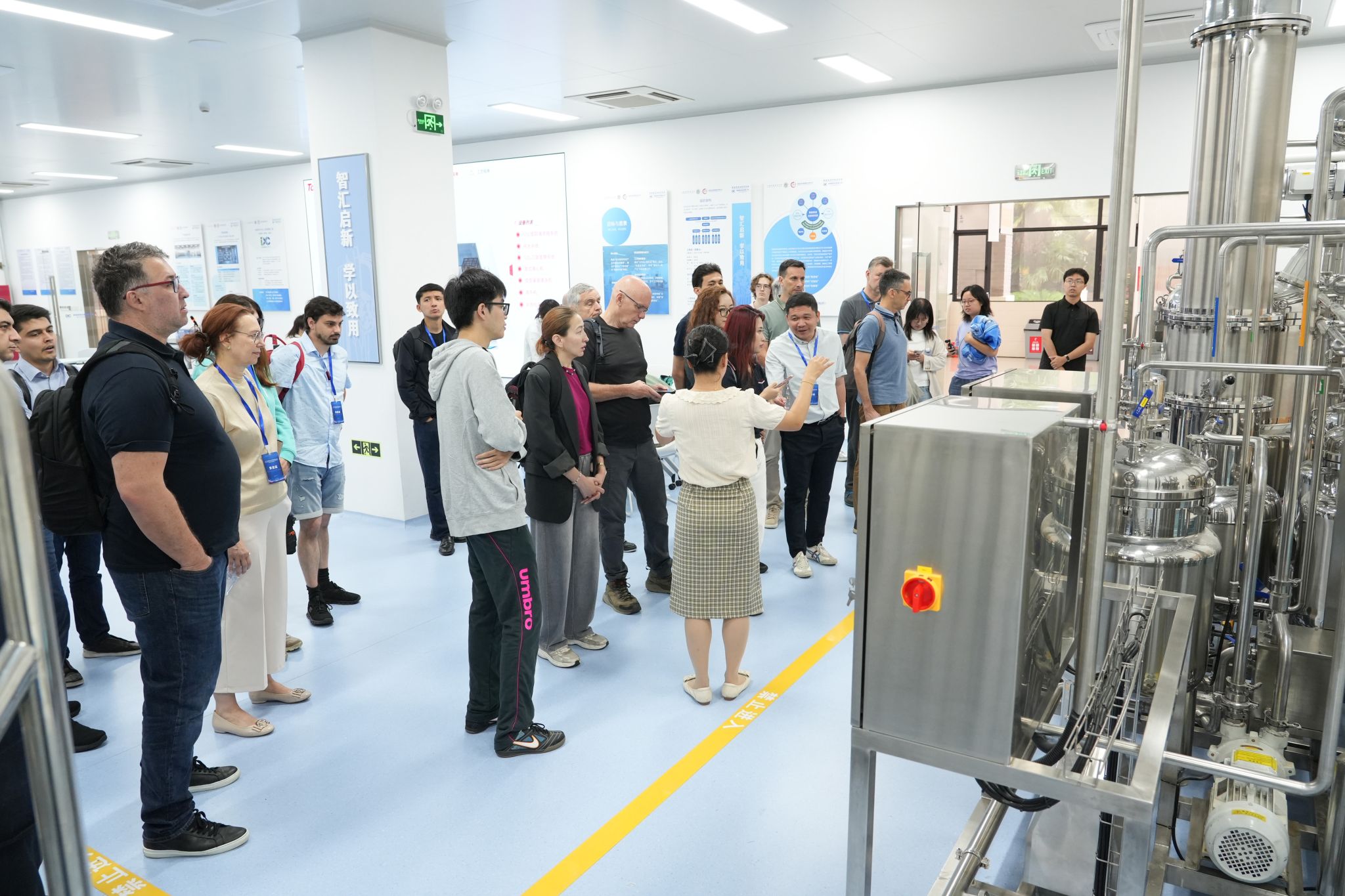
Wang Guolin, Deputy Director of the Institute of Science and Technology, provided a detailed introduction to the development of the AI4T Collaborative Innovation Institute. Xu Zhep from the Intelligent Technology Division presented on the application of large-model technologies in intelligent operation and maintenance of rail transit. Zhang Zhihong focused on the field of green plant protection, sharing intelligent variable-rate precision spraying technology and introducing innovative applications of AI in promoting green and precision development in modern agriculture. Chinese and international representatives engaged in in-depth discussions on topics including AI platform co-construction, industrial AI technology implementation, industrial upgrading challenges in various countries, and directions for cooperation. Trainees from different countries raised questions based on their home countries' industrial realities, and our University's experts provided on-site responses and aligned needs. The discussions were pragmatic and efficient, resulting in multiple preliminary cooperation consensuses.